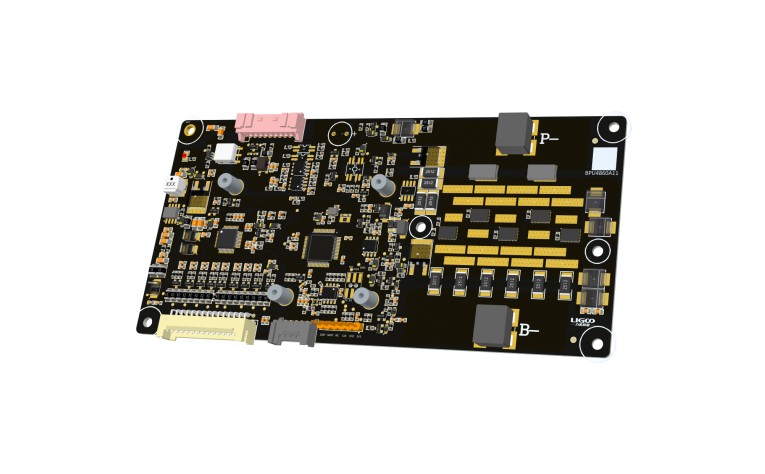
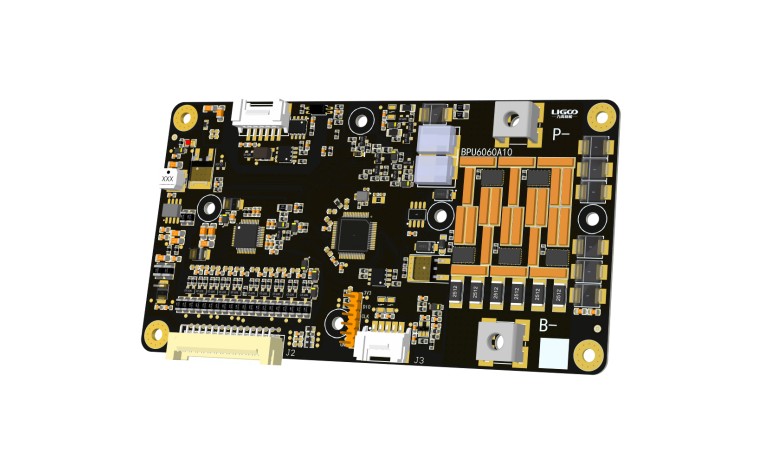
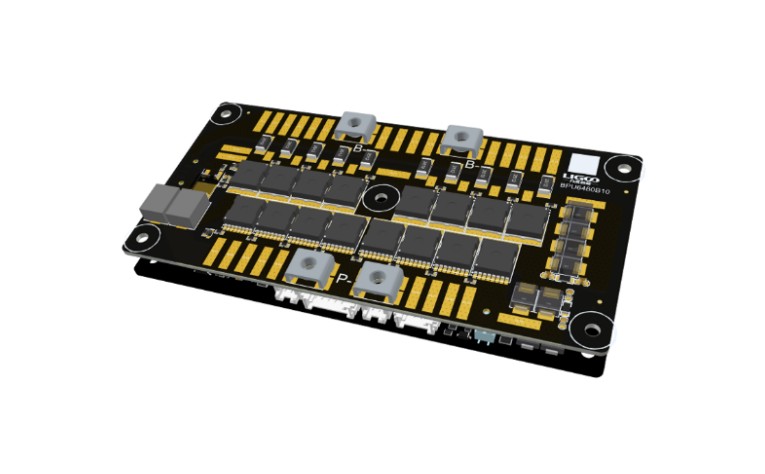
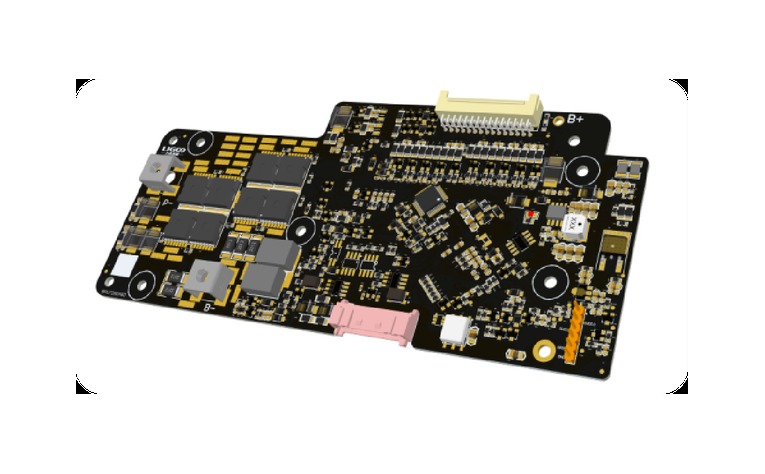






Just as autonomous driving relies on data and simulation training, the intelligent advancement of energy storage systems also needs to rely on data and algorithms.
In recent years, energy storage companies have become increasingly aware of the importance of big data, and energy storage operational data has become a significant intangible asset.

Whether energy storage system integrators or core-component companies such as energy storage PCS, they are gradually changing the previous norm of outsourcing equipment to software companies or operators for management, and are increasingly inclined to develop their own cloud platforms and take control of equipment operation permissions, initiating data-to-cloud. At present, most energy storage manufacturers have begun to build their own databases.
The industry believes that through big data analysis and mining, it can help energy storage equipment manufacturers and operators find patterns hidden in large amounts of data, feed back into product iteration and service innovation, improve asset operation efficiency and safety, and maximize asset returns.
However, a core problem commonly faced by enterprises is how to make data truly create value, rather than staying merely in the legend of ‘invisible assets’ and ‘potential value’?
On the one hand, energy storage systems are highly complex, and components such as cells, PCS, BMS, and EMS usually come from different manufacturers, creating data silos within the system. Many issues—such as intelligent battery fault early warning and smart O&M—cannot be accomplished by a single component alone;
On the other hand, the data volume of energy storage systems continues to grow, and the integration of massive and fragmented information is no easy task, requiring extensive experience and summarization, and cannot directly copy traditional big data processing methods.
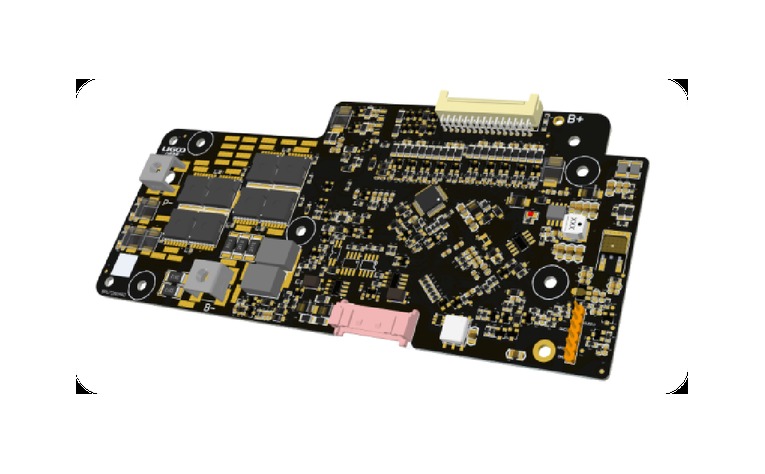
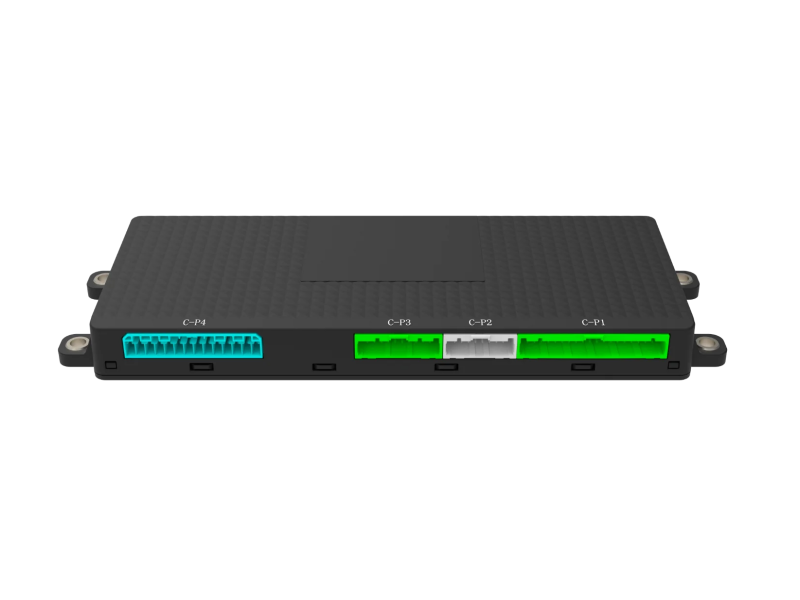
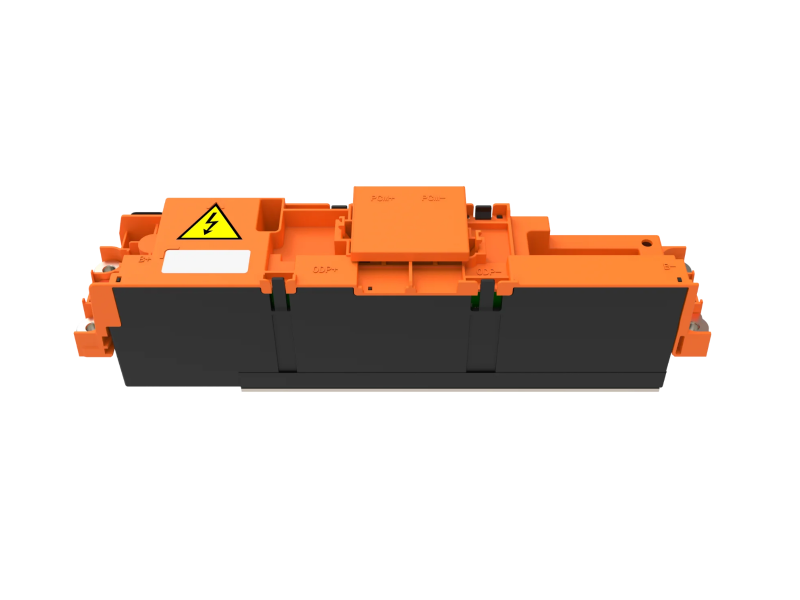
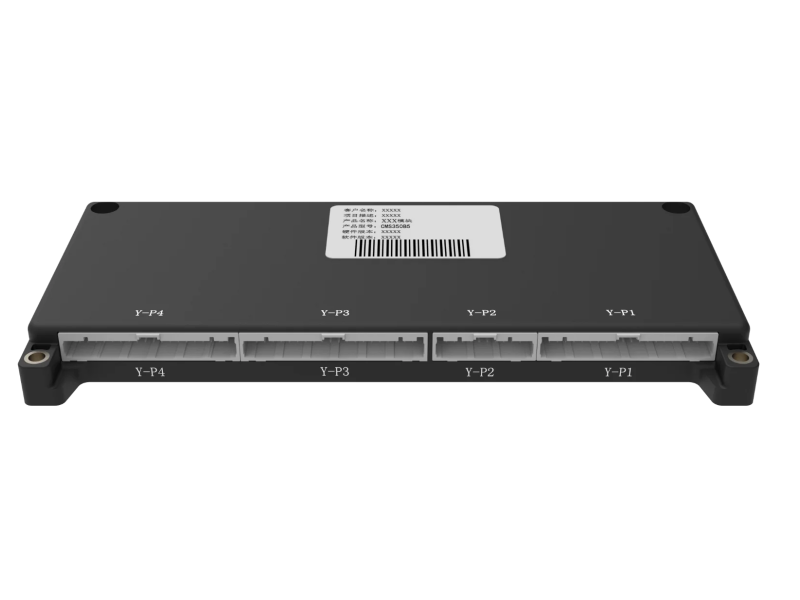
‘Based on real data, develop advanced algorithms and applications based on user needs and actual working conditions, so that data truly creates value.’ Based on its deep accumulation in the power battery BMS field and the product improvement needs in application scenarios, Ligoo New Energy initiated its NEV big data business in 2017.
Addressing many pain points in data processing, Ligoo New Energy independently developed an energy storage big data management platform, staying at the forefront of the industry in mining big data applications. It can connect to the big data management platform at the very beginning of an energy storage power station’s design, and can also intelligently retrofit existing energy storage power stations with low digitalization.
Ligoo New Energy’s energy storage big data management platform is not a simple data aggregation platform, but a complete data management solution that systematically changes the data processing approach and truly enables energy storage systems to ‘grow’ on the basis of big data.
01
The Industry’s Demand for Big Data Is Becoming Increasingly Urgent
The energy storage BMS system mainly achieves safe, efficient, and stable battery operation by monitoring, collecting, and analyzing battery information. Therefore, the BMS system involves many algorithms, including battery SOX estimation, charge/discharge control, health warning, balancing optimization, and data processing.
First, high-precision SOX estimation requires a large amount of real-world data for verification.
High-precision data acquisition and battery state SOX (SOC, SOE, SOP, SOH) estimation are important bases for energy storage system operation decisions and one of the core functions of the BMS.
At the current stage, whether it is the detection of battery voltage, current, and temperature, or the detection of various gases, high-precision detection can be achieved, but different BMS manufacturers vary in their battery SOX algorithms.
Dr. Shen Yongbo, Dean of Ligoo New Energy’s Research Institute and senior engineer, said that even if this algorithm can achieve high-precision estimation in the laboratory or under ideal conditions, various problems may arise in actual application scenarios, rendering the algorithm unusable.
In his view, whether the algorithm can truly run in real-world scenarios and maintain high precision in large amounts of real-world data is a more important and more difficult subject.
Second, intelligent balancing algorithms require training with more historical charge/discharge data.
All cells in an energy storage system are charged and discharged synchronously, but due to multiple factors such as differences in production processes and temperature differences at different positions in the battery compartment, the states of different cells in the system will differ to some extent, and as service life and cycle count increase, the inconsistency between cells will also intensify.
If there is large inconsistency in multiple indicators such as SOC and SOH between cells, it may lightly lead to system capacity waste, or seriously lead to overcharge/overdischarge reducing battery life, and may even trigger accidents such as cell fires. In this situation, the BMS’s balancing optimization technology is increasingly valued by the industry.
The realization of battery balancing lies on the one hand in the hardware architecture and on the other hand in the software algorithm, requiring the system to make intelligent decisions before issuing balancing commands. This requires BMS companies to master more historical charge/discharge data of lithium batteries, and extend the lifecycle of energy storage batteries through each precise charge/discharge control.
Energy storage safety early warning needs to be based on operational data from complex working conditions.
In recent years, safety accidents at global energy storage power stations have increased year by year. Facing the huge hidden safety risks in the energy storage industry, the state has also begun to tighten the review and acceptance of energy storage safety. Due to the intrinsic characteristics of lithium batteries, most safety accidents at energy storage power stations originate from battery thermal runaway.
However, there are many triggers for lithium battery thermal runaway, and thermal runaway caused by different problems presents different early manifestations. For example, overcharge, impact, nail penetration, water ingress, internal short circuit, and many other problems can all cause thermal runaway.
If an internal short circuit occurs in an energy storage battery, in the early stage of thermal runaway, the battery’s temperature change is not significant, but the battery interior may show reduced resistance, voltage drop, etc., generating small amounts of heat that can be promptly handled by the cooling system.
The early stage of thermal runaway is the best phase for early warning. Although the BMS, thermal management system, etc. play important roles in battery safety management, to truly contain thermal runaway in its initial stage, the key lies in more precise and comprehensive monitoring and early warning of the battery, capturing the subtle changes in various cell data.
It is worth noting that thermal runaway warning is not equivalent to safety warning. Dr. Shen Yongbo said that the key to safety warning lies in the precision rate (warning accuracy), minimizing false alarms as much as possible, while thermal runaway warning pursues the recall rate, ‘rather wrongly kill than let one slip through.’
How to miss no early warning of any thermal runaway risk while minimizing false alarms as much as possible has become a technical difficulty for battery safety early warning systems.
Energy storage is an operation-heavy industry, and the safe and efficient management of massive cells is directly related to the revenue level of energy storage power stations. As energy storage power stations grow larger and charge/discharge more frequently, traditional manual O&M is increasingly unsuitable, and the industry’s call for AI smart operation is growing louder.
Whether it is battery state assessment, balancing optimization, or safety early warning, these functions are all ‘intelligent’ applications implemented by energy storage power stations based on big data processing.
Different from conventional O&M platforms, Ligoo New Energy’s energy storage big data management platform is a comprehensive solution for improving overall operational efficiency. Based on data processing and model computation, it integrates various application modules such as data display, safety early warning, residual value assessment, data analysis, data services, and project management.
From December 11 to 13, the 2024 GGII Energy Storage Annual Conference invited leading enterprises in the energy storage industry chain to conduct in-depth discussions on key topics such as energy storage safety and smart O&M. Ligoo New Energy will further share content related to energy storage BMS, battery safety, and big data smart operation.
02
Closing the Data Gap, Leading Energy Storage Safety and Intelligent Advancement
Although more and more energy storage companies realize the importance of leveraging the power of data to optimize products, a realistic problem commonly faced by the industry is that there is a huge gap in the actual operational data of energy storage power stations.
On the one hand, the energy storage industry has only truly begun leapfrog development in recent years, with only a few demonstration projects among early commissioned energy storage power stations, plus the widespread situation of many domestic energy storage power stations being ‘built but not used’; on the other hand, energy storage systems have diverse application scenarios, and battery operating conditions differ under different environmental conditions and different charge/discharge strategies.
So, how to fill the data gap in the energy storage industry? One important way is to make good use of the operational data of power batteries.
There is little difference between power and energy storage battery BMS in charging strategy; however, because power and energy storage have different demands on the battery system, there are large differences in discharge strategy. The discharge current conditions of power batteries are complex and random, requiring instantaneous high-power output, while energy storage batteries have little demand for power and pay more attention to maintaining the consistency and safety of massive cells.
As a leading domestic third-party BMS enterprise, Ligoo New Energy has massive data accumulation in the power battery field. Starting in 2017, Ligoo New Energy launched its NEV big data business, and currently has multiple big data platform products including NEVs, NEV forklifts, and energy storage systems.
Based on data accumulation across multiple application fields and advanced algorithm models, Ligoo New Energy leads many industry enterprises in improving battery safety throughout the full lifecycle and enhancing usage efficiency.
GGII Energy Storage believes that facing higher safety requirements in the energy storage industry, energy storage BMS needs more technical improvements regarding battery safety, especially in safety early warning, where BMS has huge room to play.
So, how to achieve energy storage safety early warning? Dr. Shen Yongbo said that the industry currently mainly adopts three methods. The first is threshold-based fault diagnosis, such as setting thresholds for voltage-difference alarms, but in reality this is merely a transfer and duplication of BMS functions;
The second is battery-model-based fault early warning, which warns based on statistical learning and algorithms, but the problem with this approach is its strong correlation with the battery’s operating conditions, making the warning unstable and greatly reducing accuracy;
The third is to establish a battery early warning scoring system, which, on the basis of the second warning method, further analyzes the root causes of problems and seeks intelligent maintenance solutions.
It is understood that Ligoo New Energy’s safety early warning system adopts the third approach, and is gradually building an associated early warning system to further reduce the repeated reporting of warning items.
Currently, based on the energy storage big data management platform, Ligoo New Energy’s safety early warning accuracy exceeds 99%, the warning recall rate exceeds 90%, and it can achieve safety early warnings such as consistency warnings more than 14 days in advance.
Thanks to more than 40 data quality rules, the development of over 10 core indicator algorithms, and more than 50 high-level warning items, Ligoo New Energy has achieved a high thermal runaway warning recall rate and safety early warning precision rate.
In addition to safety early warning, the functional modules of Ligoo New Energy’s energy storage big data management platform also include residual value assessment, equipment maintenance, smart dashboards, inspection work orders, user management, degradation analysis, and task review.
It is understood that Ligoo New Energy’s energy storage big data management platform has been maturely applied in projects such as Dongfang Xuneng and has received positive feedback from customers.